For a long time, importing textiles into the EU came down to two questions: which customs duty, which origin. That era is over. The textile importer now stands at the crossroads of four stacking obligations — and the first binding deadline has already passed.
Extended producer responsibility, digital product passport, traceability, forced labour: in under two years, textiles have moved from "simple" goods to a sector under heavy regulatory scrutiny. These rules are not improvised on clearance day — they are prepared upstream. Poorly anticipated, they become hold-ups, undervalued eco-contributions and reassessments. Well anticipated, they become a competitive advantage. That is precisely CTB Group's trade.
The calendar that changes everything
Since 1 January 2025
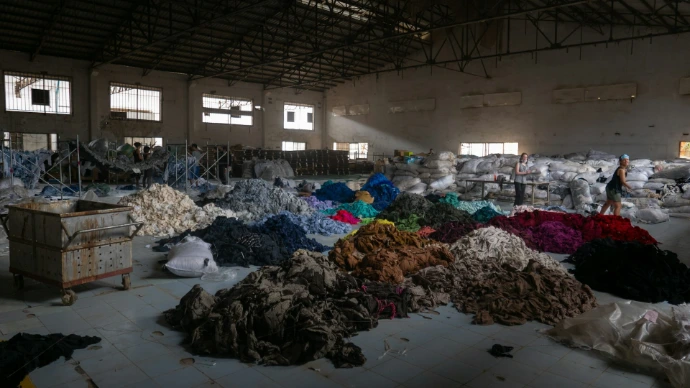
Mandatory separate collection of textiles in the EU
Since 16 October 2025
Mandatory textile EPR EU-wide (revised Waste Framework Directive)
19 July 2026
Ban on destroying unsold textiles and footwear (SMEs: until 2030)

By 17 June 2027 at the latest
EPR transposition by Member States, including Belgium; textile DPP delegated act expected
17 April 2028
National EPR schemes operational; phased application of the textile digital passport

2027-2028
Entry into application of the EU Forced Labour Regulation
The underestimated foundation: tariff classification and origin
Backend
Even before the new regulations, textiles remain one of the trickiest sectors to classify. Fibre composition, manufacturing method (woven or knitted), weight, finish — every detail shifts the HS code, and therefore the duty rate. A classification error is paid for with a retroactive reassessment.
Frontend
Add to that particularly strict rules of origin — the double-transformation rule for many articles — and anti-dumping measures targeting certain categories and origins. Poorly managed, these two points turn an expected margin into a clear loss.
Gestion
What we do. We make your articles' tariff classification reliable, verify origin and the required supporting documents, and check your exposure to anti-dumping duties before shipment — not after the control.
Textile EPR: extended responsibility becomes mandatory across the EU
Extended producer responsibility (EPR)
This is the most structural change. The revised Waste Framework Directive, which entered into force on 16 October 2025, introduces for the first time at EU level harmonised and mandatory extended producer responsibility (EPR) schemes for textiles, textile-related products and footwear. These obligations apply to any operator placing products on the EU market — including online sellers and entities established outside the EU. Importers and e-commerce operators are therefore on the front line.
In practice,
In practice, you will have to finance the collection, sorting and recycling of the textiles you place on the market, through an eco-contribution modulated according to the durability and recyclability of your products. Member States have until 17 June 2027 to transpose the directive and until 17 April 2028 to make their national EPR schemes operational — Belgium will define its own within that window.
What we do.
We determine whether you are an "obligated producer" within the meaning of EPR, identify your registration and reporting obligations, and integrate them into your import compliance file — so you never discover the obligation after the fact.
ESPR and digital product passport: structure your data now
Textiles are among the first categories covered by the Ecodesign Regulation (ESPR) and its digital product passport (DPP). The delegated act specific to textiles is expected in 2027, followed by a transition period of at least 18 months — meaning application from 2028. A more immediate deadline already affects the sector: the ban on destroying unsold textiles and footwear enters into force on 19 July 2026 (extended to 2030 for SMEs).
In time, the DPP will require reliable data on the composition, origin and circularity of each product. Structuring it today means avoiding the compliance scramble when the obligation bites.
What we do. We map the product data the DPP will require, make your origin and composition information reliable, and integrate the destruction ban into your stock management.

Forced labour: a new ground for import blockage
By 2027-2028, the EU Forced Labour Regulation will prohibit placing on the EU market — and exporting — products made with forced labour, with powers of withdrawal and seizure. Textiles, given the length and frequent opacity of their supply chains, are particularly exposed. Documenting your suppliers' traceability is no longer a communications argument: it is insurance against immobilisation.
What we do. We structure the documentary traceability of your supply chain, consistently with your customs and origin obligations.
Our difference: one reading, where others see four
A freight forwarder clears customs. A producer responsibility organisation collects the eco-contribution. A software vendor manages the digital passport. A CSR consultant audits the supply chain.
Four trades, four contacts, no overall view — and it's the importer who pays for the blind spots between them.
CTB Group occupies exactly that empty space: the control tower that links classification, origin, EPR, DPP and forced labour into a single coherent file. We do not file your declarations on your behalf and we are not a producer responsibility organisation; we prepare ready-to-file documentation, verify the quality of your data and orchestrate your freight forwarders and licensed customs representatives. Our ability to work in five languages lets you bring your suppliers — from Asia, Turkey, Portugal or elsewhere — into one shared documentary standard.
The result: fewer surprises at the border, obligations anticipated rather than endured, and a single contact who speaks both the language of customs and the language of compliance.